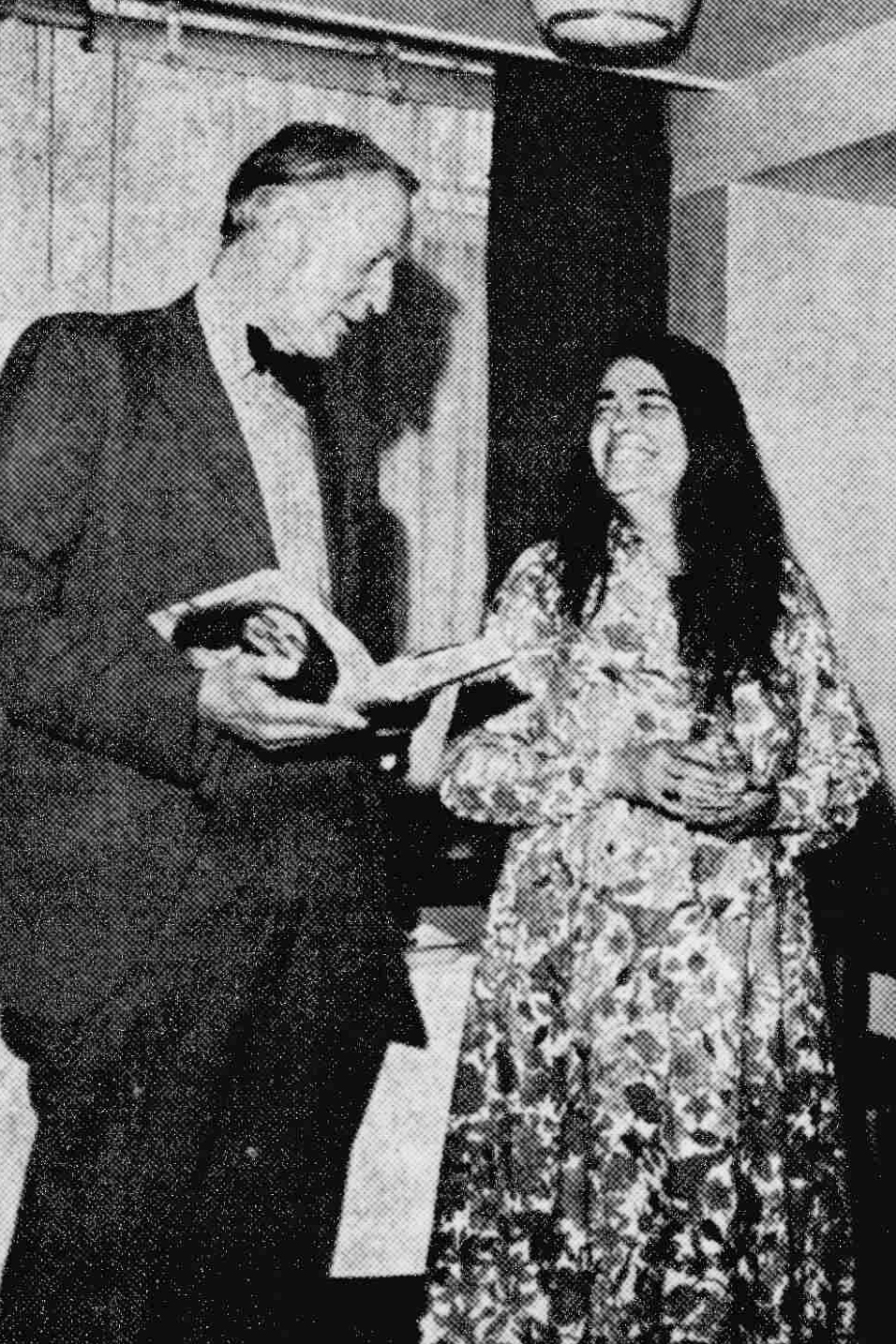
Jim Reynolds (1912-1989)
When I looked for an obituary I was very surprised I could only find a brief entry by Dianne Coles in The Bookseller. Jim had been a big part of the publishing world for many decades so it is odd that nothing more extensive was written. The Bookseller did publish extracts from his autobiography called A Kind of Living,[1] but as far as I can see the book never appeared. So, for the record, here is a brief rundown of his publishing career.
His first job was working six months at Christy & Moore, literary agents, aged 20, without a salary. A year later, in 1934, when he asked that his salary of £1 a week might be increased, Major Moore, outraged, sacked him on the spot. His next job was on The Publishers’ Circular, after which he joined Hutchinson’s in 1935 and stayed there for twelve years, including war-time service in the Royal Artillery. Two years followed as managing editor of the Temple Press book department. In 1951 he joined Frederick Muller as editorial director and remained there for nine years. George Weidenfeld offered him Arthur Barker in 1960, which he ran until 1968. He then took over the editorial direction of Sidney Bernstein’s hardback and paperback imprints that made up Granada Publishing. He and Alewyn Birch were appointed joint managing directors in 1973; Jim was responsible for editorial development and based at 3 Upper James Street. At the beginning of 1976 he resigned due to ill health, but remained a consultant. He became the chairman and managing director of the non-fiction paperback house Robin Clark, which was acquired by Naim Attallah’s Namara Group in 1979. In 1981, he was appointed the manager of Dianne Coles’ new literary agency, but left in 1988 to form his own agency, Jim Reynolds Associates.
Peter Sinclair
Dianne Coles wrote in The Bookseller…[2]
When I first met Jim Reynolds eight years ago he was probably the most respected real publisher of his generation, who had discovered many now famous authors, including Robert Ludlum. Dismayed and disillusioned by the then new mega-publishing trend, he was eager to return to the grass roots. Originally joining me to manage my small packaging imprint, Gulliver, he was soon to persuade me that we should set up a literary agency, based on his own publishing expertise.
Started in 1980, he built this up to become a leading agency in investigative journalism, and his other passion, cricket. In 1988 he set up Jim Reynolds Associates, concentrating on these areas.
He was a true socialist with an intense social conscience and respect for humanitarian principle. He was intolerant of those he considered incompetent and lazy, and a few found his manner abrasive. But this manner hid his real self, a soft romantic who could on occasions openly show his emotions. One endearing vision of him is a tall, gaunt, pipe smoking figure propping up a country pub bar, pint in one hand and manuscript in another. This is, I am sure, how he would like to be remembered.
Fred Nolan, who joined Granada Publishing as a director of publicity in 1970, added a brief anecdote in the following week’s issue.[3] The western he refers to below was written under the pseudonym Frederick H Christian. It was called Send Angel and published in 1973 by Sphere Books, who knew nothing about Nolan’s joke.
…a little vignette to illustrate the late great Jim Reynolds’ sly sense of humour. Once upon a yesterday, I wrote a western that “featured” – in one form or another – most of the gang I had worked with at Granada Publishing. It was all done tongue in cheek, of course: the town was called Daranga, and the big bad guy behind all the mayhem was a fellow called Burnstine and the two men who ran the little border town the way he wanted it were Al Birch and Jacey Reynolds.
Cut to the Daily Express, where a friendly columnist, thinking to drop me right in it, called Jim – who knew nothing about my pseudonymous activities – and asked him how he felt about my description of Jacey Reynolds: “A thin faced man, his nose long and drooping, Reynolds had the air of an unsuccessful undertaker.”
“Trust Fred to get it wrong,” Jim said, ignoring the bait. “As a matter of fact, I’m descended from a long line of very successful undertakers.”
[1] The Bookseller, 24 & 31 December 1977, pp 3262-65.
[2] The Bookseller, 5 January 1990, p 14.
[3] The Bookseller, 12 January 1990, pp 112-3.