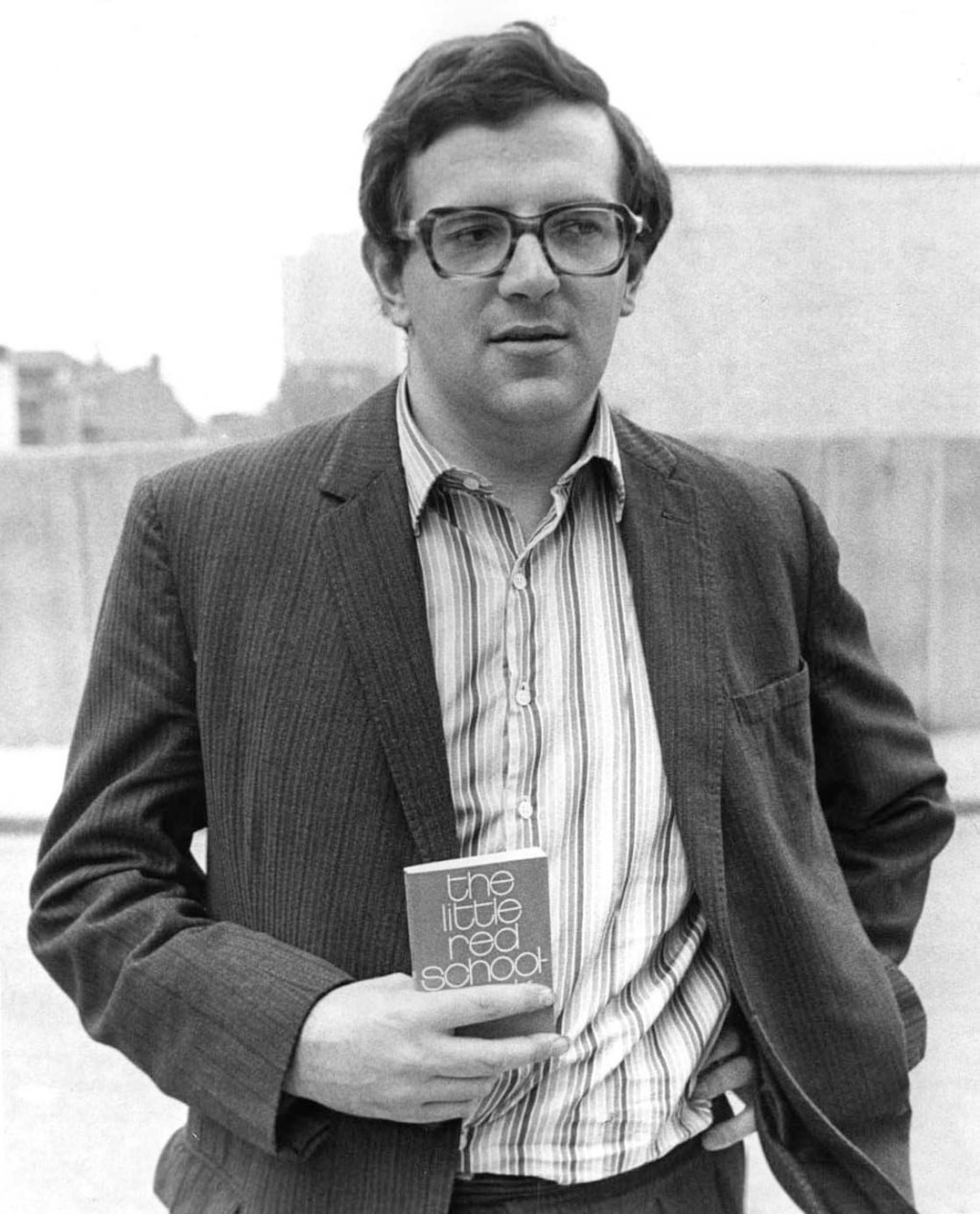
Richard Handyside (1943-2024)
From The Times obituary, 6 December 2024
Richard Handyside was born 13 July 1943 in Oxford and grew up in Surrey, the elder son of Bridget (née Gormally), a Cordon Bleu cook, and Richard Reay Handyside, a police officer.
Educated at Epsom College, he was a chorister at King’s College, Cambridge, and later sang in the Monteverdi Choir under John Eliot Gardiner. After a gap year in Grenoble he went on to read modern languages at King’s. An innate gift for languages — he was fluent in French, German, Spanish and Italian and was able to read Portuguese, Danish, Dutch, Norwegian, Czech, Polish and Russian — meant he found the course unchallenging and he switched to economics and sociology.
His radical views were by then pronounced, in part shaped by a summer job as a courier on trains travelling between Britain and Spain. On those journeys he encountered anarchists smuggling literature and messages back and forth and was impressed by their commitment.
On graduating he worked briefly for a cotton importer, which involved travelling to the American Deep South, where the working conditions he witnessed further influenced his political views.
He got his first job in publishing working for Robert Maxwell’s Pergamon Press before founding Stage One in 1968, at a time when a countercultural tide of protest was sweeping western Europe and the company’s name referenced the idea that revolution “comes in stages” — and that the first phase in radical change is education.
When he published The Little Red Schoolbook it was Mary Whitehouse, the permanently affronted defender of public morals, who brought down the full wrath of the law on his head. John Mortimer QC mounted a characteristically urbane defence but Handyside was found guilty of possessing obscene publications for gain.
He was fined and ordered to pay costs but was permitted to publish an expurgated version of the book. He then took the case to the European Court of Human Rights, arguing that his conviction violated his right to freedom of expression. The ECHR took four years to rule, but eventually rejected his application on the grounds that there was no “uniform European conception of morals” and so therefore the UK courts were best placed to judge whether the book would corrupt the morals of British teenagers.
However, he won a victory of sorts in that the ruling established the principle that freedom of expression was applicable not only to ideas that were favourably received by society but also to those that “offend, shock or disturb the state or any sector of the population”. It was a landmark declaration that remains the case law standard for the examination of freedom of speech cases to this day.
In his later career he remained consistently ahead of the curve as a radical entrepreneur with a visionary bent. In the early days of the IT revolution, he co-founded Autodesk, which became a leader in the field of computer technology with the 1983 launch of its AutoCAD software, under the slogan “a simple programme in a complex world”.
The software was used in the making of Star Wars and after giving a seminar at a 1986 trade show in Moscow, he struck several pioneering joint venture deals which marketed Autodesk’s products across the Soviet Union and eastern Europe.
He was striking a deal in Prague in 1989 shortly before the Velvet Revolution when he met Helena Koutna, a Czech translator and interpreter. They never married but she was his partner for 20 years. He is survived by his son Matthew Fryett from an earlier relationship.
In the 1990s he became a trailblazer for sustainable buildings and started Construction Resources as “the UK’s first ecological builders’ merchants”, producing environmentally friendly and recyclable products from bricks and mortar to insulation materials and solar panels.
A discerning connoisseur of life who loved good food and wine, the venture was typical of a perpetual curiosity that all his life led him to take on the challenge of new projects in the hope of improving the lot of humanity.
Richard died of a cardiac arrest on 15 October 2024, aged 81.