Granada Publishing, 1971-73
This is not a history of Granada Publishing, but it is about those who worked for it in the early seventies, seen through their attempt to get union recognition. In passing, mention is made of some of the most influential people in book publishing over the next thirty years or so. Sadly, many have died and links to their obits are in bold red. A few are still stumbling on, though, and it is their faulty memories I’ve plundered to build a picture of those chaotic times, full of youthful hope and great expectations.
In 1971, Jim Reynolds and Alewyn Birch were jointly running the enterprise for Sidney Bernstein, chair of the Granada Group. Reynolds, who arrived from Weidenfeld in 1969, had editorial control and Birch, recruited from Heinemann in 1967, was in charge of sales. At that time the hardcover imprints were MacGibbon & Kee, Rupert Hart-Davis, Adlard Coles and Staples Press; paperbacks Panther Books, Paladin Books, Mayflower Books, Dragon Books; and educational Rupert Hart-Davis Educational.
Reg Davis-Poynter had already left Granada the year before to set up his own company. Michael Dempsey took over from him as the managing director of MacGibbon & Kee in 1971. The ‘Granada Powerhouse’ was breaking up – William Miller and John Boothe at Panther were leaving with Brian Thompson and Ken Banerji to launch Quartet Books, Carmen Callil, Public Relations, joined Deutsch as publicity manager and two years later set up Virago. David Larkin, Granada’s art director, had made a big splash with the cover of Germaine Greer’s The Female Eunuch, and Sonny Mehta was ramping up Paladin Books.
Behind the successes and staff turnover, frustration continued to grow with corporate Granada and its accounts-led decision making. Recent employees wanted a proper pay structure and written terms and conditions. Reg and Claire Walsh at Allan Lane had been trying to bring together people working in London publishing to join a union and, at a packed meeting at the Plough in Museum Street in 1970, the Publishing Branch of ASTMS (Association of Scientific, Technical and Managerial Staffs, long since absorbed into Unite) was formed.
At its first AGM in 1971, Reg was elected chair, Oliver Freeman from Granada, vice-chair, and Claire, secretary. Unionising book publishing had become a hot topic. The Branch undertook a survey of people working in publishing and the Publishers Association appointed its first Industrial Relations Officer, who also organised a survey for the PA. The results from both led to a flurry of letters in the Bookseller.
On 22 January 1972, the Branch held a well-attended Publishing Workshop at the TUC, with Neal Ascherson, Clive Allison, David Elliott, Martyn Goff, B S Johnson, Dieter Pevsner, Tim Rix, Maurice Temple-Smith, John Willett and Ed Victor speaking.
At its next AGM that month, Oliver was elected chairman, Reg vice-chair and me to the committee. Many of us wanted Granada to recognise the union and decided to do something about it, although some of the managers excused themselves on the day…
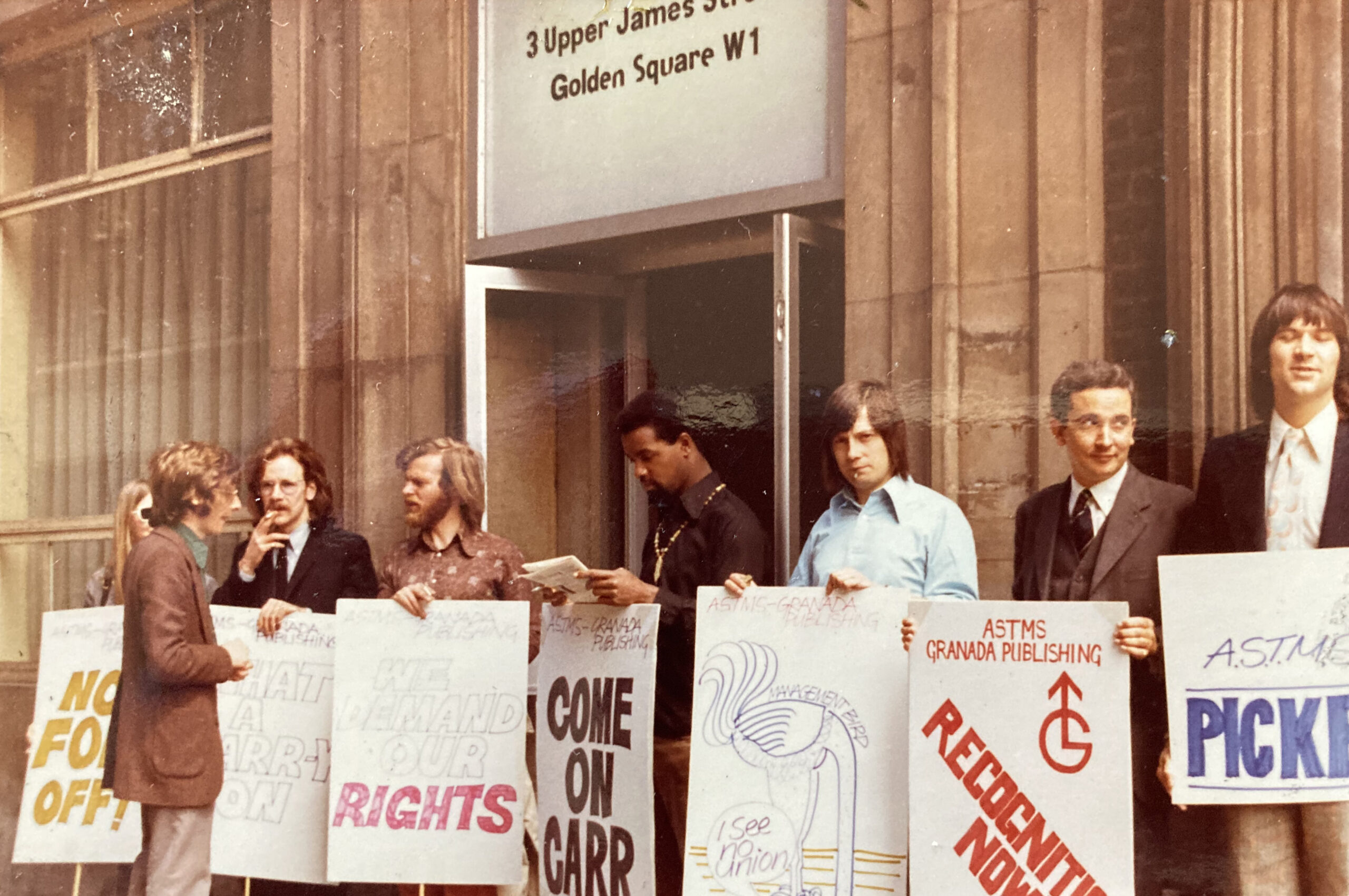
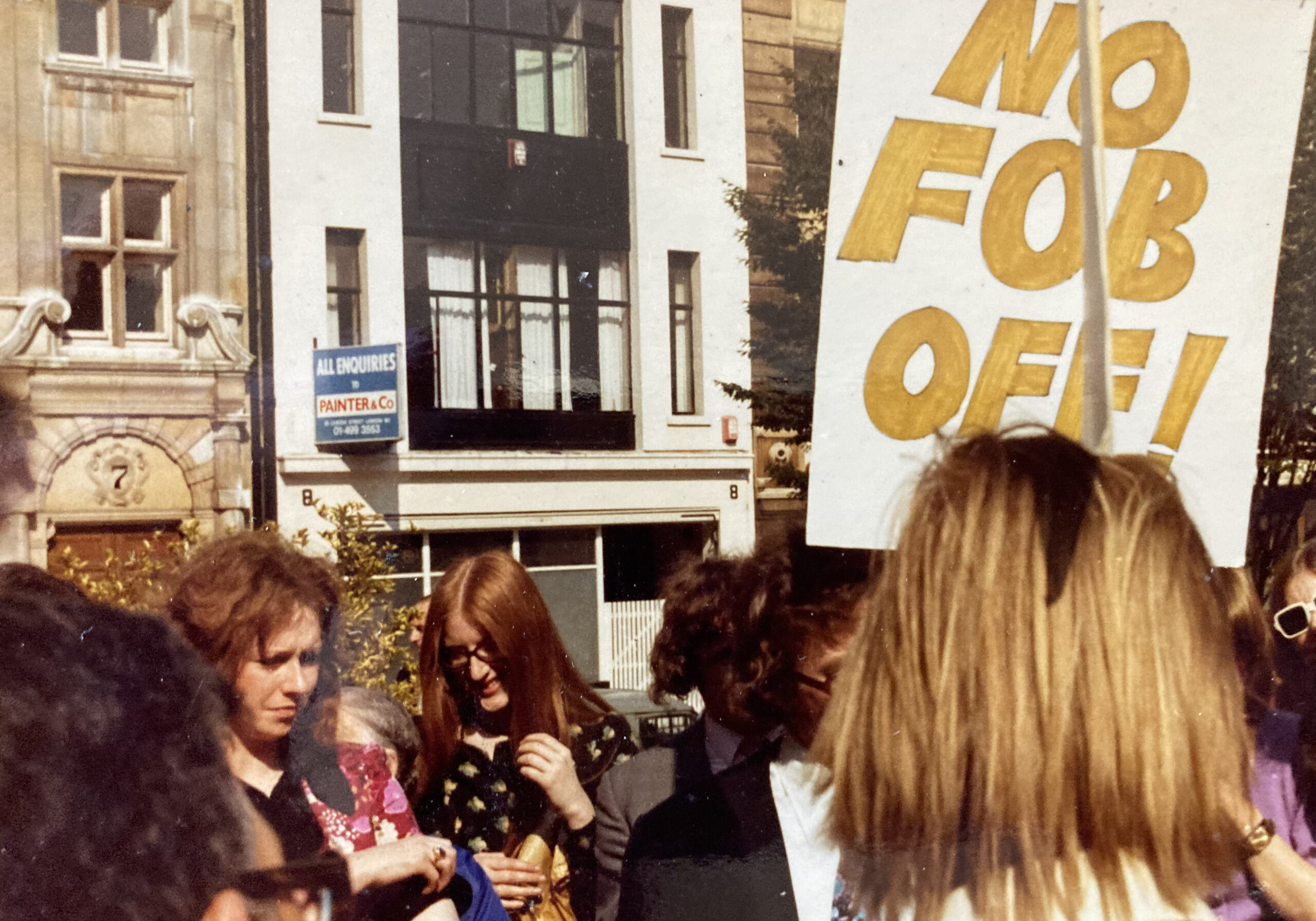
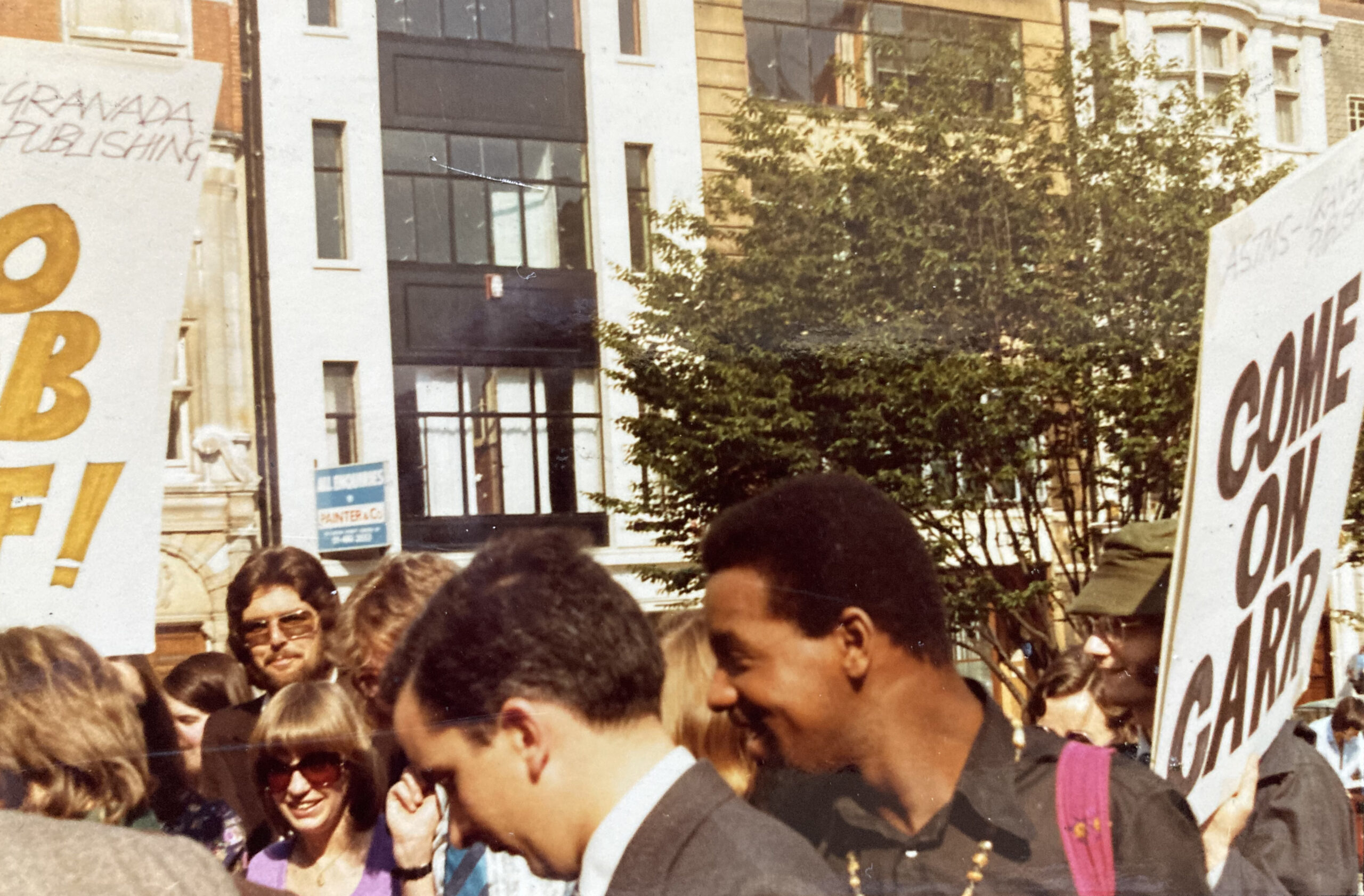
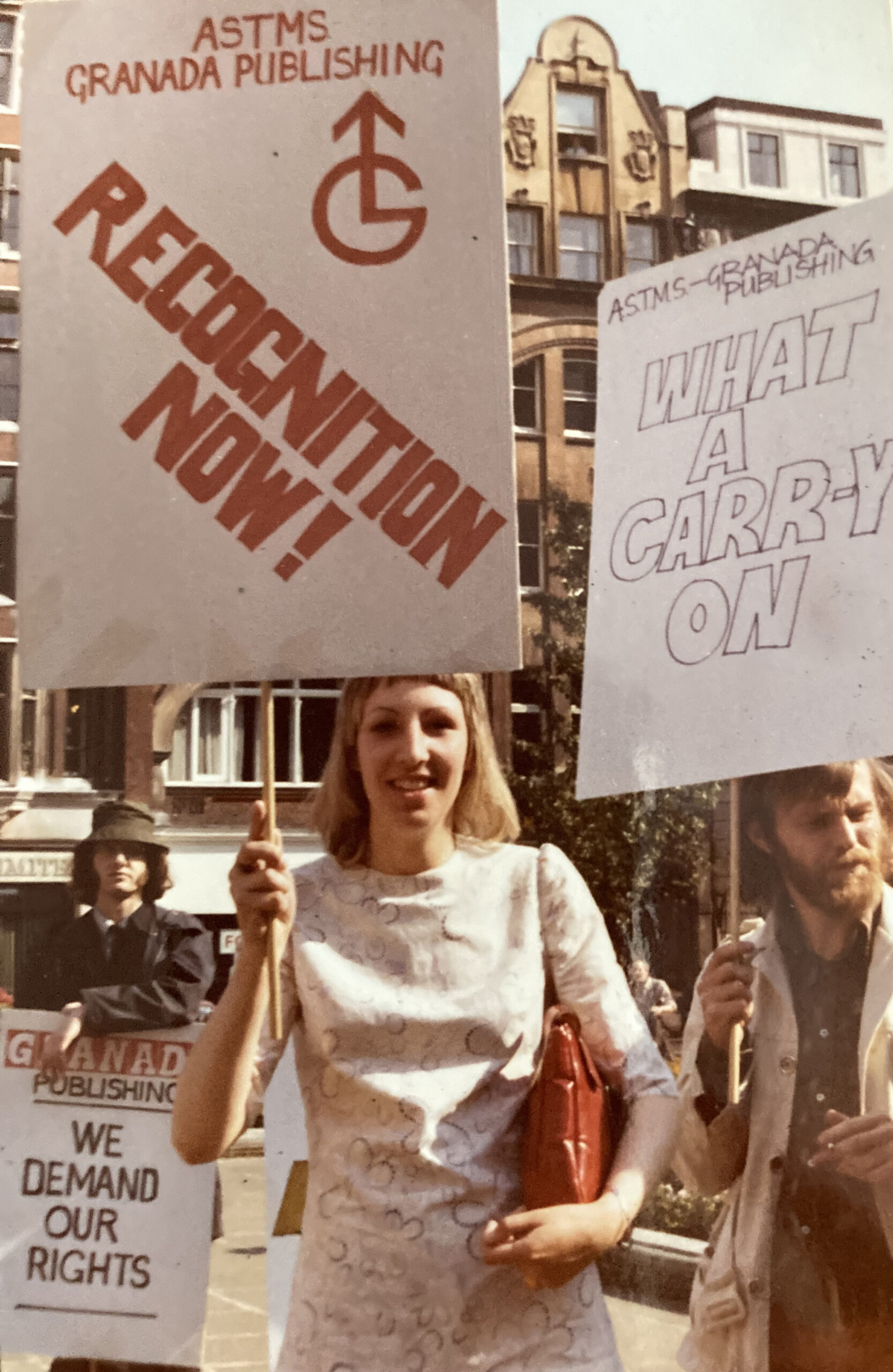
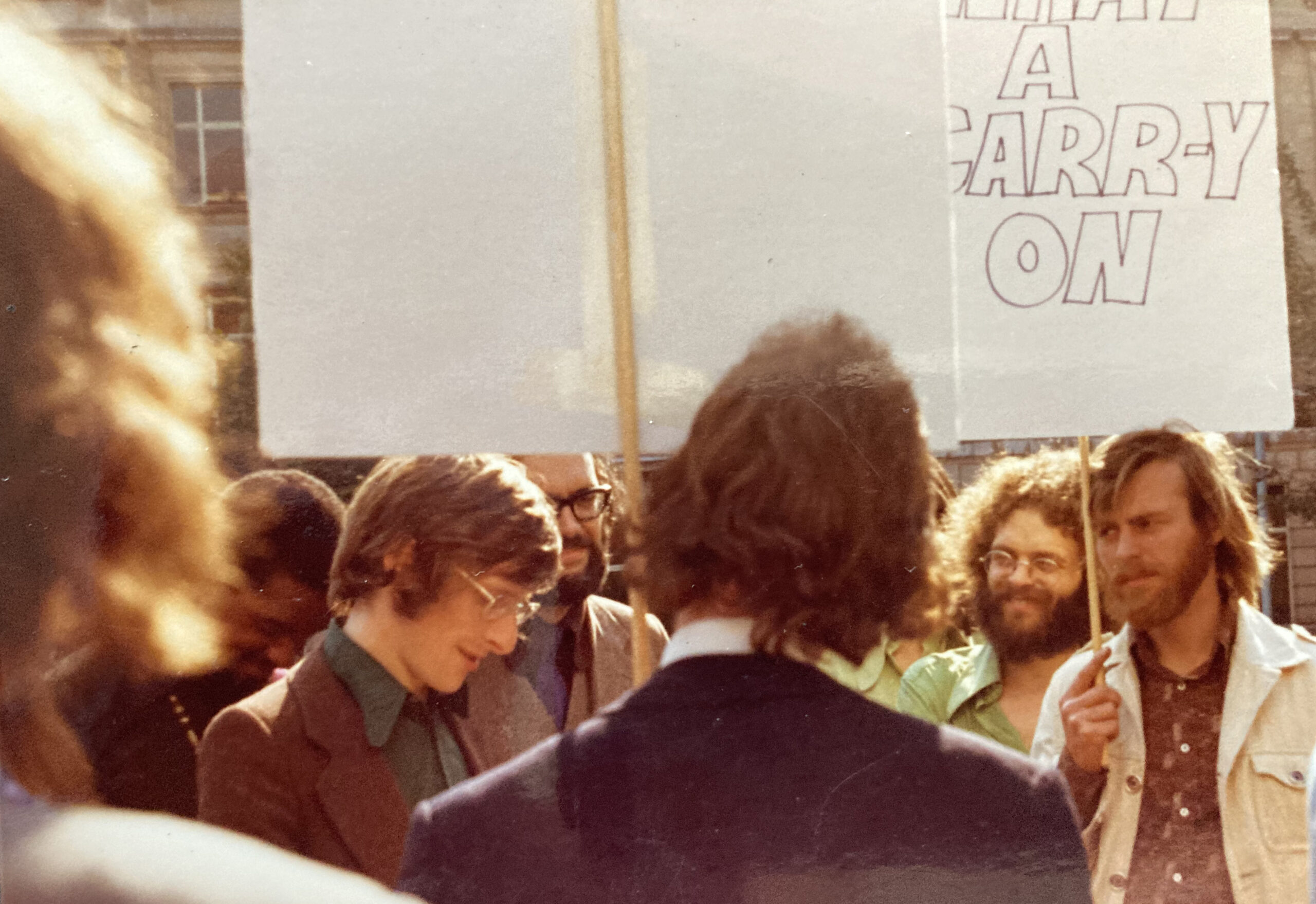
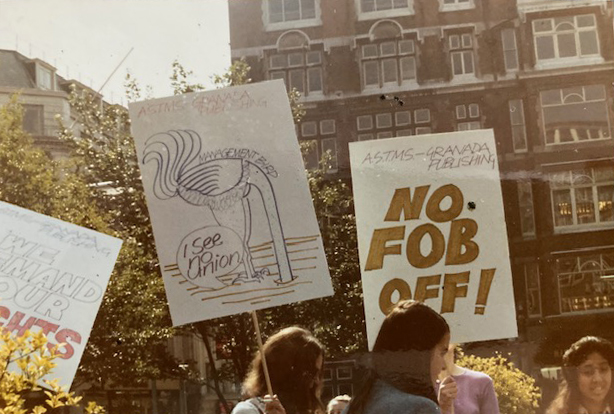
On Wednesday, 12th July at 10 a.m. over 50 members of Granada publishing staff stage a token walk-out in support of the demand being made by A.S.T.M.S. members in Granada for recognition of their union. This followed an earlier threatened walk-out on 3rd May which resulted in a secret ballot being held. Out of 96 members of staff who voted, 57 wanted A.S.T.M.S. to represent them (no other union received a vote, except one for the N.G.A.).
Because of management’s refusal to arrange a formal meeting the walk-out finally became a reality. S.O.G.A.T. members in the Granada warehouse in Teddington supported the action by refusing to deliver or collect from the Head Office in Upper James Street. Similarly A.C.T.T. [cinema technicians] members in the same building supported the walk-out and provided refreshments for the pickets. Many printers’ delivery men refused to cross the picket, including postmen and N.C.L. drivers. At 5 p.m. everyone returned to work. A formal meeting between management and representatives of the union to discuss recognition has now been arranged.
The Bookseller (22 July 1972) reported that the ‘Granada management, commenting on this, point out that the total number of publishing staff eligible and invited to vote on the issue of unionisation is 170, so that a figure of 57 is some way from being a majority. Nor do they think that in any one of the four questions on the ballot form, which dealt with the wish or otherwise to join or to be represented by a union and the question of which of several unions would be most widely acceptable, the votes specifically in favour of A.S.T.M.S. exceeded 50. They insist that discussions about the unionisation of the Granada publishing staff have at no point been discontinued, and that they are still continuing.’
The Granada move to Park Street near St Albans in November 1972 split the publishing staff. Commissioning editors remained at Upper James Street and desk editors, sales, promotion, production, art, administration, accounts, distribution and warehouse found themselves on the edge of a windswept airfield between Radlett and St Albans. Tube travel gave way to driving to work and Cranks to Granada’s subsidised restaurant.
Granada acquired Crosby Lockwood in 1972 and Rupert Hart-Davis and M&K merged to become Hart-Davis McGibbon. Birch and Reynolds were made joint managing directors in 1973, with Birch in charge of the new offices at Park Street and Reynolds responsible for editorial development with the commissioning editors at Upper James Street.
ASTMS members continued to be active in the Publishing Branch, although at its AGM in 1973, I was the only Granada rep left on the committee. Most were from educational publishers like Longman, CUP and OUP, who were at the forefront of gaining recognition for the union. By the middle of that year, demoralisation really set in amongst Granada’s staff, caused, of course, by an intransigent management whose inept handling of their concerns was unbelievable. I had had enough and joined Richard Handyside at Stage One, infamous for publishing The Little Red Schoolbook.
In 1974, Doug Fox and Anita Pollack were elected to the committee, but by that time much of the enthusiasm for union recognition had waned. Anita left Granada in 1975, later working for Barbara Castle and serving as an MEP for London South West, and Doug became an editor at Newnes-Butterworths in 1976.
Patrick Janson-Smith, group Public Relations, joined Octopus Books in 1972, Sonny Mehta became executive director of Pan Books and Keiren Phelan left Adlard Coles for Heinemann in 1973, Alan Brooke, an editorial director at Hart-Davis MacGibbon, left in 1974 and joined Michael Joseph, Michael Dempsey was ‘let go’ and Nick Austin moved to Sphere in 1975, Oliver Freeman left in 1976 and joined Oyez Publishing, Nick Webb, senior fiction editor, left to work for Pan Books in 1977, and Jonathan Yglesias, group production director, joined Penguin Books in 1978. Steve Abis, David Larkin’s successor, stayed with the company, but died of cancer aged 48 in 1992.
Jim Reynolds retired in 1977 and later formed a literary agency with Dianne Coles. Birch stayed with Granada Publishing to become its chairman and managing director, and retired in 1985. It was sold to William Collins in 1983 and ceased to exist in 1999.
Peter, 2026
with help from Anita, Oliver, Keiren and Patrick