Granada’s union activists
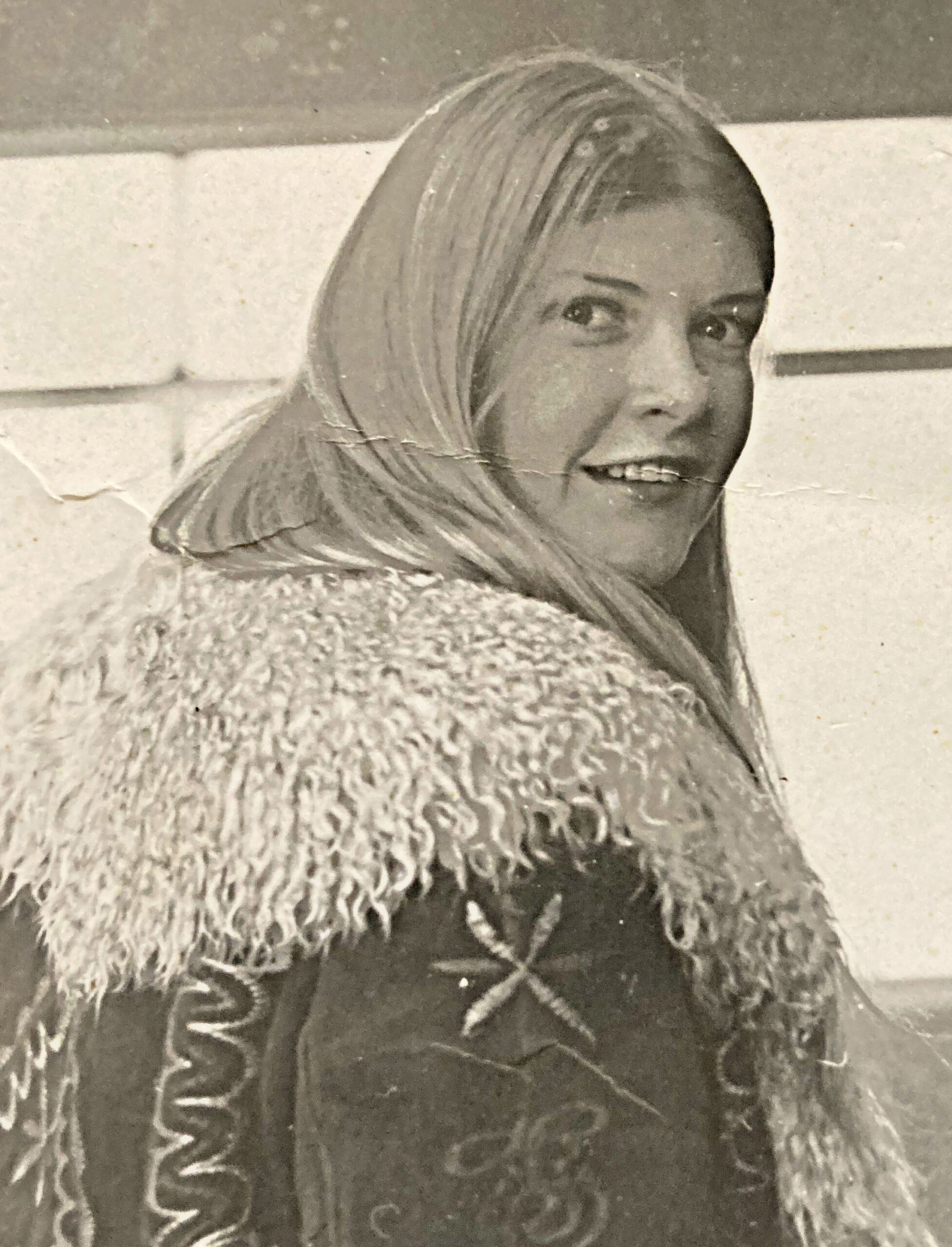
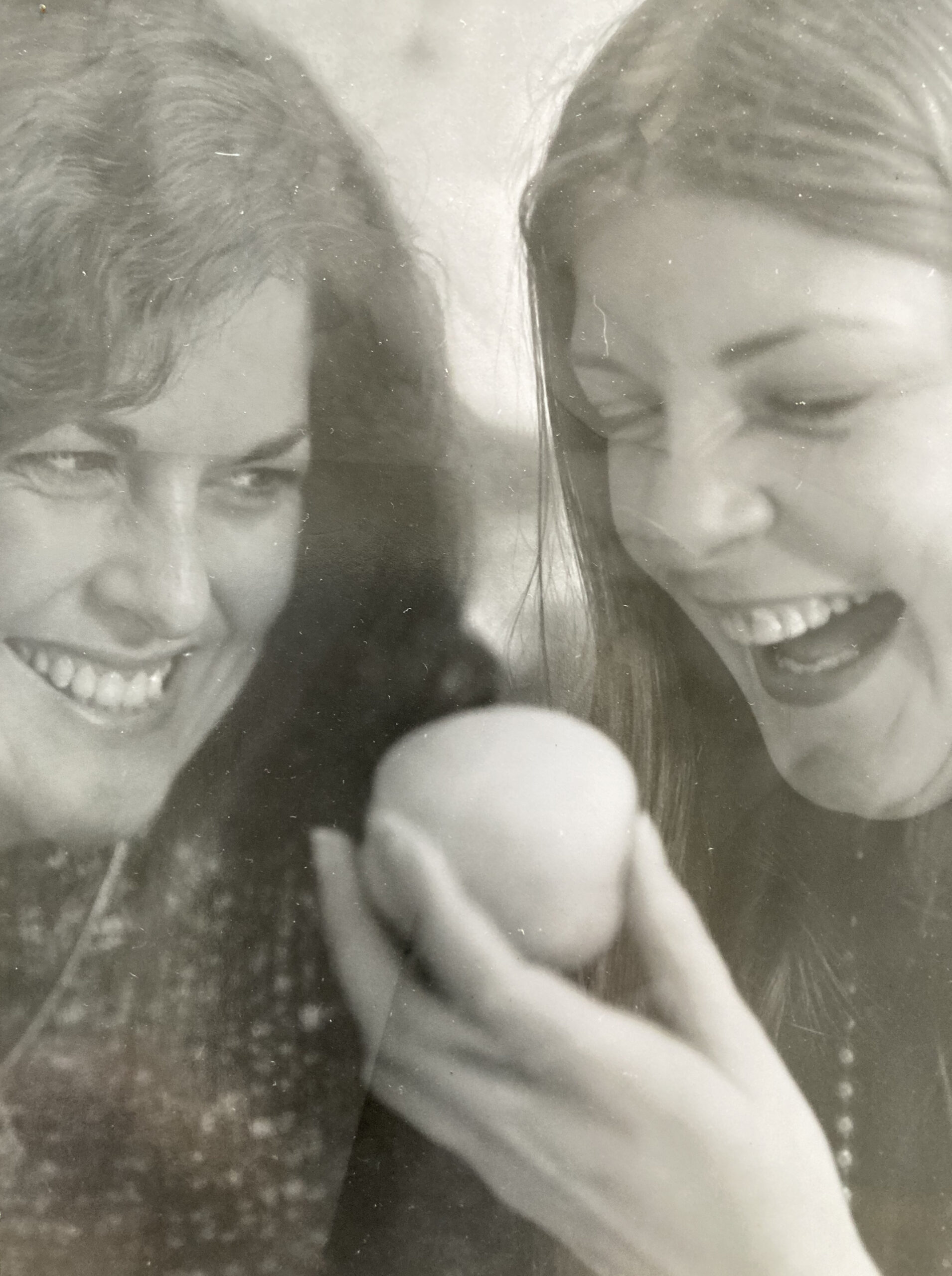
Anita Around fifty years ago I worked at Granada Publishing, initially at Adlard Coles, as an editorial secretary. My boss was Jim Reynolds, a kind and witty publishing professional who I remember fondly. I was a young immigrant from Australia where I had spent the first five years of my working life in advertising, at McCann Erickson in Sydney. I had graduated from a four year degree level night course in advertising and marketing, and slowly worked up to being an assistant desk editor on the general hardback list, Hart-Davis, MacGibbon, where I mostly read and reported on unsolicited manuscripts.
The big star in the firmament was Sonny Mehta. Immediate colleagues were Keiren Phelan, Oliver Freeman, Peter Sinclair, John Boothe, Jonathan Yglesias, Lionel Trippett and Ira O’Flaherty. The office was in Golden Square, near Piccadilly, just off Carnaby Street. Walking down from Oxford Circus tube every morning was always a buzz because of the numerous new fashion shops there in the seventies.
Life took a hard turn when management bean counters decided to re-locate the department I worked in to an inaccessible spot on the edge of a disused airfield at Radlett near St Albans in Hertfordshire with a hellishly difficult daily commute. I invested in a terrible old banger to get there from East Ham where I lived which rewarded me by breaking down frequently and there were several occasions when my partner had to drive up and tow me home. There was a question about joining a trade union. Editorial staff were not considered eligible to join the NUJ, and a thrusting white collar union, ASTMS, opened the door, so a bunch of us joined that, after which there began a lengthy negotiation for recognition. Management was not keen and eventually we held a short strike which led to some sort of negotiations.
Labour Party politics was taking up much of my out of work energy (not least helping de-select a Cabinet Minister, Reg Prentice). Eventually I resigned to undertake a “gap year”, travelling back to Australia, and on my return enrolled in a degree course at City of London Polytechnic. Following that I took an MSc in the evenings at Birkbeck College and went to work as a researcher for Barbara Castle, then leader of Labour’s MEPs. The rest is politics. I was elected MEP for South West London in 1989 and 1994. I am now living quietly, well retired, with two granddaughters, at the outermost reaches of London and still in the Labour Party.
Keiren I joined Adlard Coles in early 1971 aged about 24, having spent a couple of years as editorial dogsbody on the magazine Motor Boat & Yachting. A classified ad in its back pages was for an assistant editor at Adlard Coles Ltd, undoubtedly the country’s leading nautical publisher, and I was hired after the briefest of chats with the editor James B Moore. I think he was glad to find someone familiar with printers’ proof correction marks and who knew port from starboard. James was genial, if somewhat remote, an experienced sailor himself and with an instinctive grasp of the market. However, he little knew how little I knew about actual sailing, my experience being entirely aboard motor boats.
After a few months James left and was replaced by a very experienced editor, Michael Stevens, but who was a complete landlubber and this was to prove his un-doing. Michael came from Jonathan Cape and I learnt a great deal from him about the craft of editing; he was a generous, witty and kind man and I enjoyed working with him. He had an understandable penchant for narrative texts and nautical memoirs, but the strength of the list lay in its technical titles, on navigation, pilotage, design, construction and racing. I came in one morning to find him at his desk with his head in his hands having, I think, had an early morning meeting with Jim Reynolds. He had been beguiled by a forceful author into a huge over-printing of a pointless little sailing primer, at great cost and negligible sales. Michael left very soon after and I was sorry to see him go.
However, I then found myself in the editor’s seat and with a more assertive approach to what we’d publish. In this I was helped by a freelance editor who turned up, possibly through the connections of Anthony Wood who worked at McGibbon & Kee. Phoebe Mason was a New Englander who arrived with the massive credentials of having sailed across the Atlantic and survived the food crisis on board by scraping barnacles off the hull. Phoebe and I were a pretty good team, aided of course by a steady stream of very capable secretaries (as they were then known). I suppose Granada Publishing must have had a Personnel Manager somewhere but either these jobs were over-sold or under-paid as the secretaries with higher ambitions and talent came and went (Dinah Seward, Catherine Perry, Sally Lentaigne, Sarah, Anita Pollack, Christine Maliseck-Mills). Anita went on to have a compelling career in politics and was the first Australian to become an MEP, when we had such things.
The first-floor offices at 3 Upper James Street were all off a longish corridor, each with glass-fronted doors. I was gazing out of mine one day when I was transfixed, cartoon-style, by a Titian-haired beauty ambling past and I opened the door and stared after this Pre-Raphaelite vision in yellow clogs. I turned to Christine for an explanation: this new girl was Jenny Cuffe, fresh out of Newnham, who had inexplicably turned down a job at Thames & Hudson to work for Joy Fisher at Rupert Hart-Davis Educational. (I should say at this point that I’m still transfixed by Jenny Cuffe, who went on to have a terrific career in radio, but at the time she could never tell me and Peter apart, as our offices faced each other and our faces were apparently too alike!)
It wasn’t called Golden Square for nothing. I loved working in and exploring Soho, with the joys of Berwick Street market, of Marshall Street swimming baths, of Cranks and its fabulous baps and, on occasions, the John Snow, a pub which seemed mostly used by people from the production department.
This all ended with the relocation of less senior staff – and sailors – to the Park Street office at Radlett. Not such fun and I eventually left to work at Heinemann in Mayfair for about eight years, then two years at Pitman, then redundancy, after which I began a second career in the arts funding system.
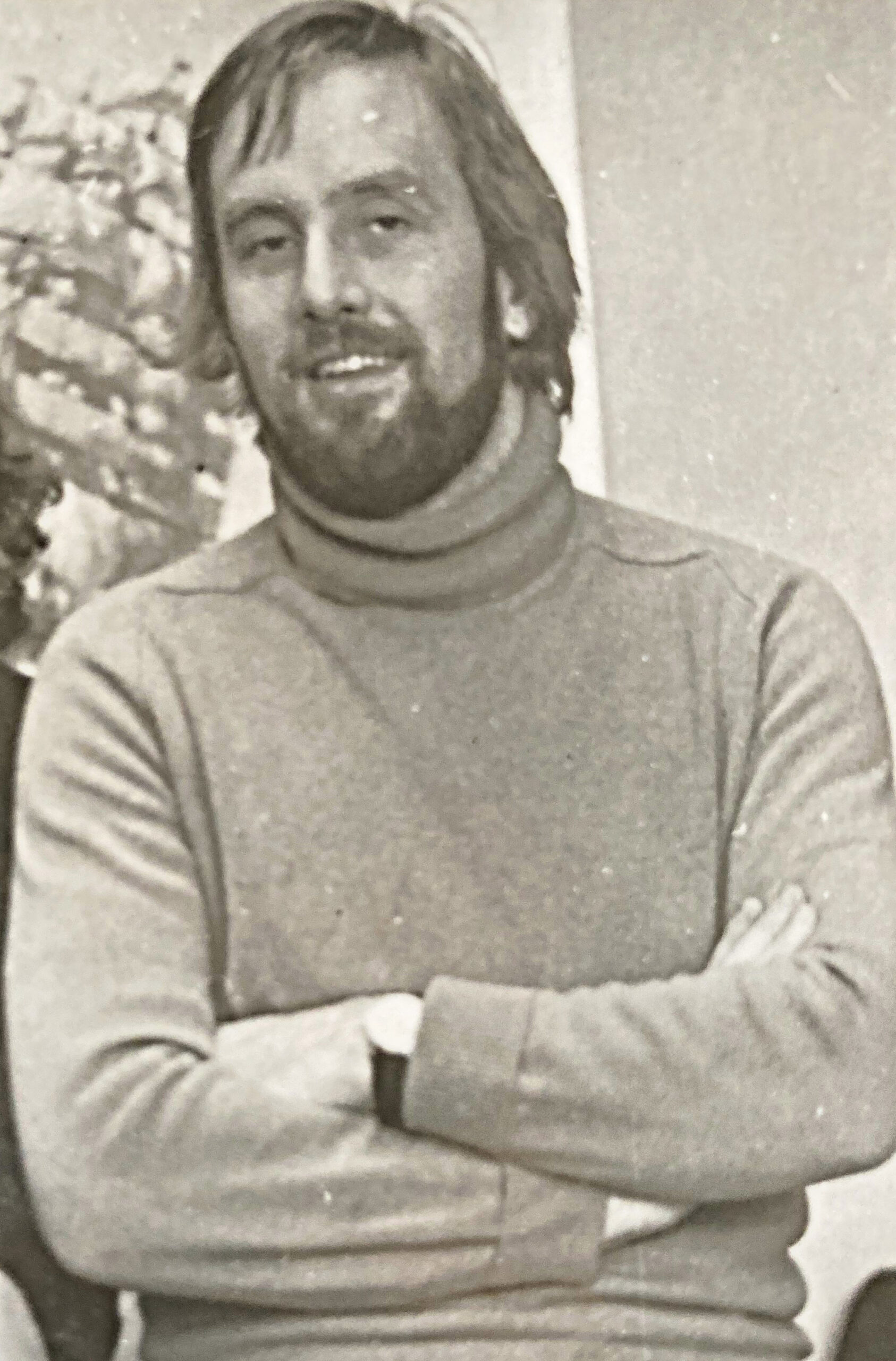
Oliver I joined Granada in 1969 reporting to MD Jim Reynolds on the hardback trade sales side. I became involved with Reg Davis-Poynter in the national formation of the ASTMS publishing union in 1970. Reg was its founding chair and I was vice-chair – and we were both employees of Granada Publishing.
The ASTMS union was the first to represent all publishing employees who until then could only find representation if they were printers, warehouse workers or journalists. Recruitment at Granada was steady and covered staff in London and St Albans as well as people working nationally. The magic figure of 50% of all employees as members was achieved in 1972 – a time when I was effectively shop steward after Reg had left Granada to start his own business.
Granada refused to recognise the union despite the numbers and its founder (Sidney Bernstein) being a labour peer. Members decided to run a one-day strike, led by me, in 1972 to argue the point. The stoppage was a modest success with participants congregating in Golden Square and the new office, Frogmore, near St Albans and raising a glass or two of Pinot Grigio to the future.
The next morning, I was summoned to a meeting of the Publishing Board with Sidney and Bob Carr, as well as senior publishers, present. The meeting reached its climax very quickly when Sidney said, “Mr Freeman, we are thinking of asking you to resign.” I paused for a moment and then replied “Well, that will be very expensive for you.”
You could hear a pin drop. I was then asked to leave the meeting and wait to be recalled. Ten minutes later I re-joined the meeting and the Board made me an unexpected offer. (1) I’d relinquish my role as Shop Steward and not be involved with the local ASTMS group but could continue my national ASTMS role; (2) I’d be appointed as Director of the Technical Publishing Division to clarify my management responsibilities; and (3) I’d get a salary increase.
This was a powerful offer, given I had three kids and two mortgages, so I said ‘yes’. Divide and rule, I guess but it worked OK for me. Sidney may have been guided by the fact that one of my most successful authors was Robin Barry, author of a five-book series called the Construction of Buildings, and husband of Sidney’s first wife – Zoe Farmer.
I left Granada in mid-1976 for Oyez Publishing when Alewyn Birch downsized me by taking Adlard Coles from my division to offer a potential publishing recruit – despite my having turned the imprint around with Jeremy Howard Williams.
In 1981 Oyez was acquired by Pearson Longman. Ironically, Longman had already recognised ASTMS and senior Longman staff were on its national panel – Paula Kahn comes to mind. ASTMS arranged a weekend training session for publishing people. When we assembled for a final review we were told that as a group we were much better role players of management than of union staff. It is no surprise that at least five of the Longman ASTMS cohort ended up as CEOs of publishing entities.
The lasting impression I brought away from my six years at Granada was the amazing opportunities that were offered to me as my role quickly changed from sales to editorial then publishing and management. Coupled with this was my enjoyment of an amazing group of colleagues – especially Campbell Black, Alan Brooke, Carmen Callil, Fred Nolan, Michael Dempsey, Steve Abis, Sonny Mehta and the permanently quizzical Jim Reynolds.
I also built a publishing division from the ground up with Gill Gosnay (who I married) and Doug Fox before setting sail for pastures new, to include my own book businesses for over 20 years.
Peter I met Mike Dempsey on Crouch End Broadway one Saturday morning while I was selling the Morning Star. He had recently been elected a Labour councillor for Coleraine ward in Haringey. When he learnt I was a subeditor at Edward Arnold Publishers he asked if I’d like to change jobs. Within months it had been wangled and I was working for M&K at 3 Upper James Street. What a contrast to an old-school educational publisher like Edward Arnold in Mayfair. Instead, it was all happening at Golden Square in Soho!
I remember in particular the regular editorial meetings chaired by pipe-smoking and bow-tied Jim Reynolds. They were attended by commissioning editors like Mike for hardbacks and Sonny Mehta for paperbacks, Jonathan Yglesias for production, Stephen Abis from the art department, Oliver Freeman for sales, Patrick Janson-Smith for publicity and motley others. There was always tension around the table, with Mike fighting for his author friends’ new books and Sonny for US titles to share print runs with. Patrick invariably injected humour into the proceedings and Jim would always have the final say.
After the walkout I was asked to attend a meeting with Birch and Sidney Bernstein in his plush Granada Group office, but not to discuss recognition of the union. They were both dead against any negotiations. Instead, I was told by Birch not to expect promotion in Granada, nor would I be any better off moving to another publisher like Hutchinson – a veiled threat verging on blacklisting. I was naïve enough to think an old leftie like Birch wouldn’t stoop so low.
Then the move to Park Street handed us over to his fiefdom and he became the cause of much despondency. Some of us took to driving to decent pubs in places like Shenley to have lunch and take the edge of working in Park Street under his tutelage. My first child was only two at the time and I didn’t want take part in evening drinking sessions back in London, where a lot of connections were made. It was while I was working at Park Street that I started having chest pains, but an ECG didn’t show anything unusual.
When I started working for Granada I was particularly excited to be associated with M&K’s radical backlist. There were some great titles published in its early days, like the Fitzroy Editions. I was still able to work on interesting books like The Colonial Revolution by Fenner Brockway and Journals of Resistance by Mikis Theodorakis, but I was becoming disenchanted with uninspiring and apolitical US originals.
By early 1973 I didn’t want to stay any longer and agreed to join a small radical publisher at half the salary. Many thought I was making a big mistake – what about my pension? That was the trap I wanted to avoid. As compensation I made my escape with sections of M&K’s original mahogany and leather-topped desk strapped to the top of my brand new Saab 96. The desk has remained with me for 53 years, but now I want to donate it to another refugee from commercial book publishing.
Not long after I met an editorial colleague leaving the Chelsea Arts Club in top hat and tails having been to Ascot, so I knew I’d done the right thing. And my chest pains had vanished, too…